Every job below is one we do ourselves across Arcadia.
We frame new decks with pressure-treated joists on concrete footings sized for Florida wind load, not just whatever the old deck used. Beams get hurricane straps where they tie to posts, and the ledger gets flashed before any decking goes down.
Soft spots in a deck almost always mean a rotted joist or a ledger board that's been soaking up water for years. We cut out the bad wood, sister in new framing where we can, and replace what we can't save instead of screwing a board over the problem.
New pressure-treated pine has to dry out for a few weeks before it'll take a stain, so we don't rush that step just to get off the job faster. We pressure wash first, let the wood dry, then seal with a product rated for direct Florida sun so it doesn't gray out in a year.
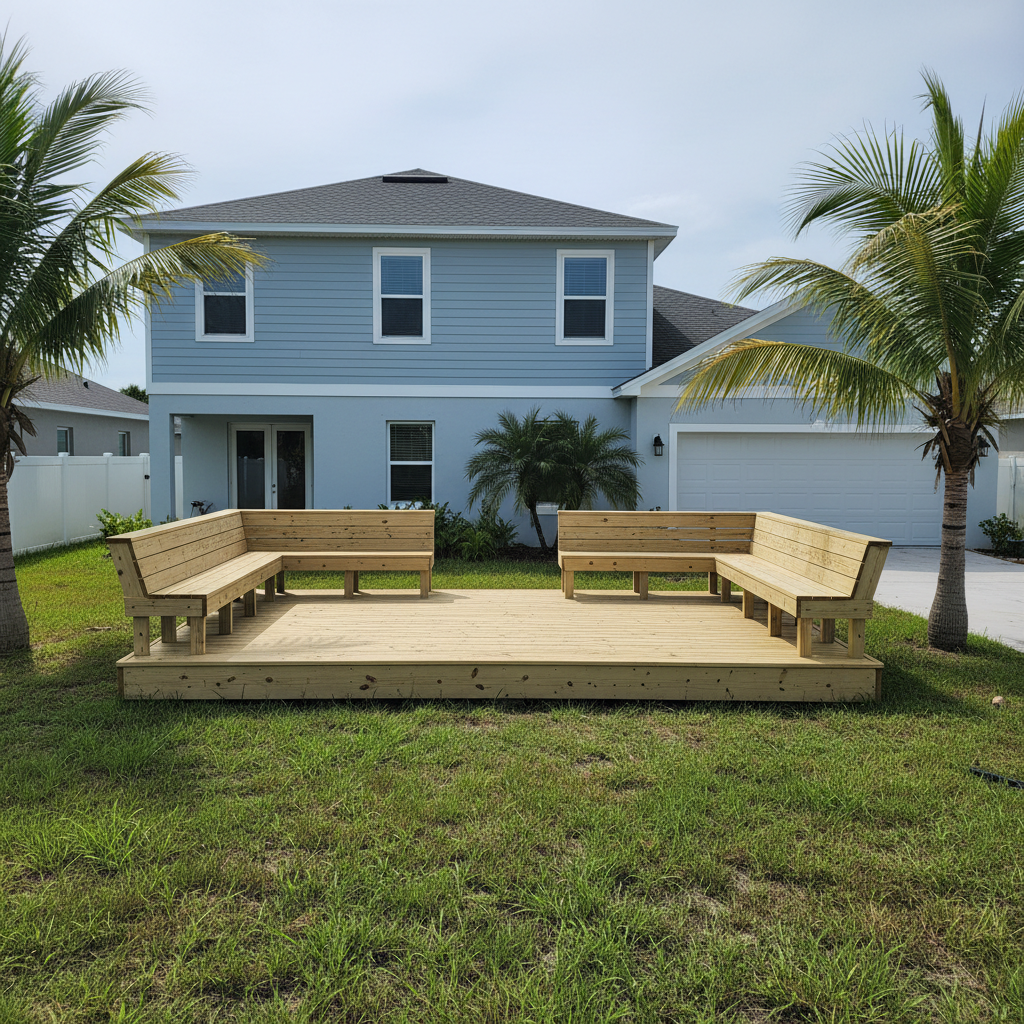
Some decks need to wrap around a pool cage, drop down to a fire pit, or work around a septic field you can't dig into. We'll draw the layout, size the footings for it, and tell you upfront if the yard's grade is going to add stairs you weren't planning on.
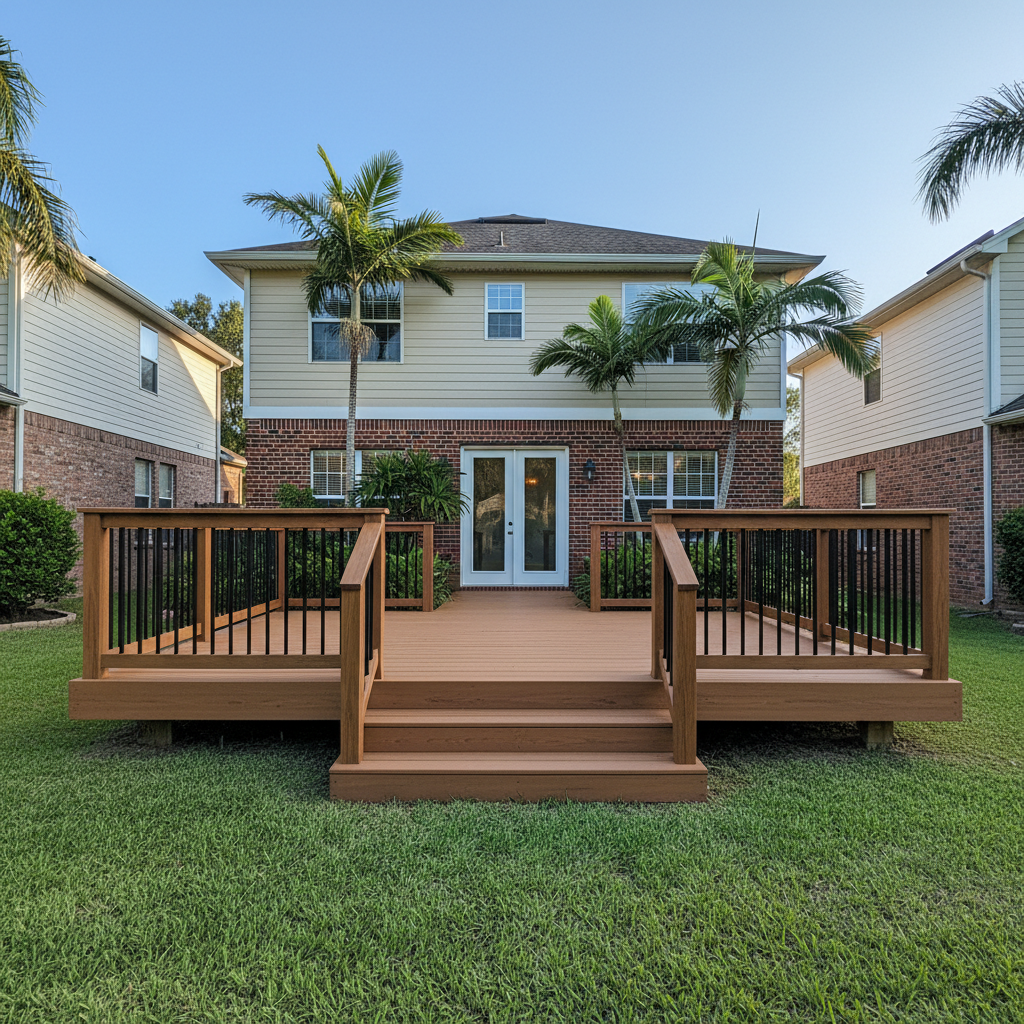
Composite boards like Trex or TimberTech don't rot, but they expand and contract more than wood, so the gaps and fastener spacing have to be set for that. We use hidden fastener systems on most composite jobs so you don't see a screw head anywhere on the surface.
If the frame underneath is solid but the boards are cupped, splintering, or worn out, we strip the old decking and run new boards over the existing joists. It's faster and cheaper than a full rebuild when the structure still checks out.
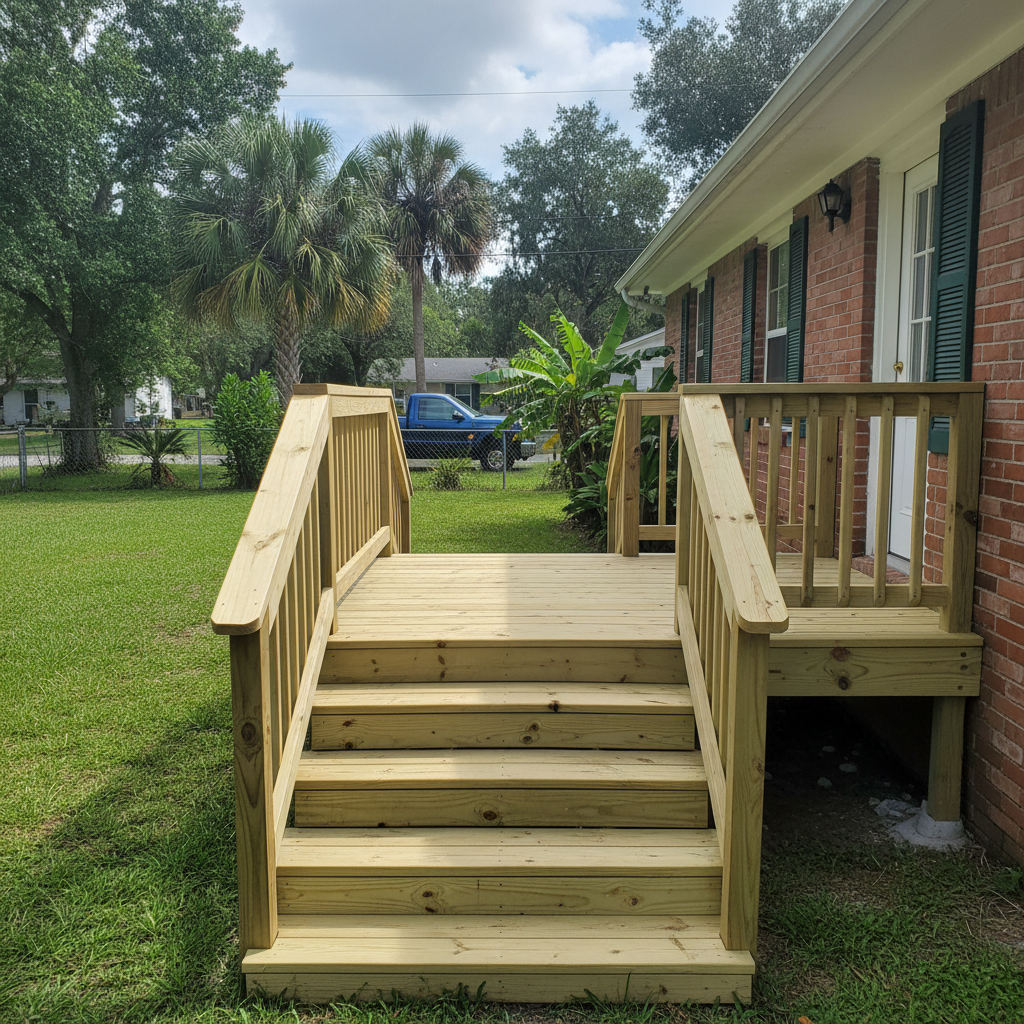
Wobbly railings usually mean the posts were never bolted through to the frame, just screwed to the face of a board. We through-bolt posts, space balusters to meet code, and rebuild stair stringers that have started to rot where they touch the ground.
Pool decks take constant splash and sun, so we steer people toward composite or capped boards instead of raw wood whenever the budget allows. Fasteners and hardware have to be stainless or coated for the chlorine exposure, or they'll rust within a season.
Adding a screen enclosure onto an existing deck changes the load and the drainage, so we check the frame before building the cage on top of it. Most of these jobs also need a new permit even if the deck underneath was already approved.
Sometimes the real fix is tearing the whole thing out, especially if the footings were undersized or the ledger's rotted past saving. We'll tell you straight if that's the case instead of patching something that's going to fail again in two years.
Four steps, and no surprises in any of them.
You tell us what you want doing, we look at what is actually there, and we ask the awkward questions early.
In writing, itemised, free. If something might add cost later we flag it now rather than at the end.
Same crew throughout. We cover your floors, keep the dust down and tidy up before we leave each day.
You point out anything you are not happy with and we fix it before the invoice, not after.
Deck crews travel to these towns regularly for builds and repairs.
Questions that come up once a deck project is actually underway.
Describe the problem and we will tell you what it probably is. No obligation.